For many people, Christmas gift stress starts in November and does not let up until the last present is wrapped. The money worries, the endless lists, the fear of getting it wrong, the crowds, the deadlines. It turns what should be a joyful season into an endurance test. But it does not have to be this way. Gift stress is almost entirely preventable with some planning and a willingness to set boundaries. Here is how.
Understand Where the Stress Comes From

Gift stress usually has four sources, and most people are dealing with at least two at once:
- Money stress. Worrying about affording gifts, going into debt, or spending more than you can handle.
- Decision stress. Not knowing what to buy, fear of choosing the wrong thing, analysis paralysis in crowded stores.
- Time stress. Too many people to shop for, too little time, shipping deadlines looming.
- Social stress. Obligation gifts, family politics, keeping up with what others spend, fear of judgment.
Identifying which of these hit you hardest is the first step. The solutions are different for each one.
Start Early (But Not Too Early)
The single biggest stress reducer is starting early. Not in August (that creates its own anxiety about forgetting what you bought), but in late October or early November. Here is why it works:
- You avoid the December crowds and picked-over shelves.
- Shipping is cheaper and faster before the holiday rush.
- You can spread spending across two pay periods instead of one.
- You have time to think, which leads to better gift choices.
- If something is out of stock, you have time for a plan B.
Set a personal deadline of December 10th to have all shopping done. Everything after that is wrapping and enjoying the season. The last two weeks of December should be for savoring, not scrambling.
Make a List and Actually Use It
A gift list is not just a nice idea. It is the difference between calm and chaos. Your list should include:
- Every person you need to buy for, including the easy-to-forget ones (teachers, neighbors, host gifts).
- A budget per person. Even a rough number prevents overspending.
- Gift ideas as they come to you throughout the year. Keep a running note on your phone.
- Purchase status. Bought, wrapped, shipped. Checking things off is deeply satisfying and prevents duplicate buying.
- Where you bought it and the receipt location. Future you will thank present you if something needs returning.
Set a Budget You Can Actually Afford
Money stress ruins more Christmases than anything else. The fix is a budget set in October, not a credit card bill discovered in January.
How to Set a Realistic Budget
- Look at last year. Check what you actually spent (bank statements do not lie). Use that as a baseline.
- Decide the total first. Pick one number for all gift spending. Then divide it among people. Do not start with per-person amounts and add up; you will always overshoot.
- Include the hidden costs. Wrapping paper, cards, shipping, stocking stuffers, and food gifts add 15 to 20 percent to most people's gift budget. Account for them.
- Use cash or a separate account. When the gift money is gone, you are done. This hard stop prevents the slow creep of “just one more thing.”
If Money Is Tight
A small budget does not mean a sad Christmas. It means a creative one. Consider a group gift exchange instead of individual gifts, set a low price cap that everyone follows, or give experiences and homemade gifts. The people who love you do not want you going into debt for them.
Set Boundaries Without Guilt
Social stress comes from saying yes when you want to say no. These boundaries are not rude. They are healthy.
- It is okay to opt out of exchanges. If a gift exchange feels like an obligation rather than fun, decline politely. “We are keeping things small this year” is a complete sentence.
- Suggest a price cap. If an exchange has no limit, propose one. Most people are relieved.
- Do not match spending. If someone gives you an expensive gift, you do not owe them an equally expensive one. Give what you can afford and what feels right.
- Limit the list. You do not owe a gift to every coworker, neighbor, and acquaintance. It is fine to narrow your list to the people who matter most.
- Say no to hosting if you cannot handle it. Hosting Christmas is a separate stress from gift-giving, but they compound. It is okay to suggest a restaurant or someone else's house.
Simplify Your Approach
Complexity is the enemy of calm. These simplifications cut stress dramatically:
- One store strategy. Do as much shopping as possible in one place (online or off). Fewer trips, fewer decisions, less time.
- Theme your gifts. Give everyone a book, or everyone a food gift, or everyone an experience. Theming eliminates the “what do I get for…” spiral for each individual.
- Gift cards are fine. Despite the stigma, most people are happy to receive gift cards. Pair with a handwritten note and it feels personal.
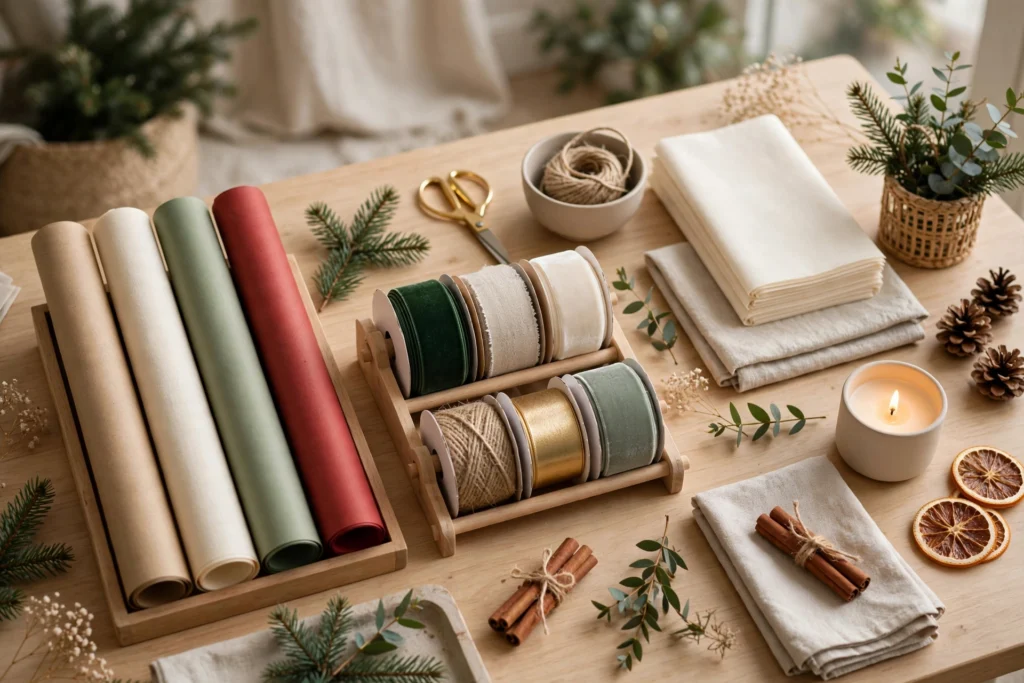
- Wrap simply. Use one wrapping paper for everything, or use gift bags. Nobody remembers the wrapping, but you will remember the hours you saved.
- Shop online. Avoid the mall entirely if crowds stress you out. Order early, track packages, done.
Handle Difficult Gift Situations
The person who is impossible to shop for
Stop trying to find the perfect gift. Get them something consumable (good chocolate, nice coffee, a candle), an experience (dinner out, movie tickets), or a donation to a cause they care about. Done.
Family members with different spending levels
Talk about it directly. “Hey, we are keeping gifts around $30 this year, hope that's okay.” Most people are relieved. If someone insists on overspending, accept graciously without feeling pressured to match.
Feeling unappreciated
If you put thought into gifts and get a lukewarm response, it stings. Remember that reactions in the moment do not reflect true appreciation. And consider whether you are giving to please others or to meet your own expectations. Giving should feel good, not resentful.
Take Care of Yourself
This sounds obvious, but self-care evaporates in December. Protect these basics:
- Sleep. Do not stay up until 2 a.m. wrapping gifts. Start earlier in the evening or wake up earlier. Exhaustion makes everything feel worse.
- Say no to something. Every yes to an event, exchange, or obligation is a no to rest. Choose deliberately.
- Keep one ritual for yourself. A quiet morning coffee, a walk to see the lights, reading by the tree. Something that is just for you.
- Ask for help. Partners, older kids, and friends can wrap, shop, bake, and address cards. You do not have to do it all.
- Lower the bar. The house does not need to look like a magazine. Dinner does not need five courses. Good enough is genuinely good enough.
Reframe What Gifts Mean
At its core, gift stress comes from treating gifts as a performance: a test of how well you know someone, how much you can spend, how creative you can be. But gifts are supposed to be an expression of care, not a competition.
A useful reframe: the best gift is one that says “I thought of you,” not “look what I can do.” A $15 book you chose because you know they love mysteries beats a $75 gadget you grabbed in a panic. Thoughtfulness is free, and it is what people actually remember.
Your Anti-Stress Checklist
- Set a total budget by November 1st
- Make your full gift list by November 15th
- Finish all shopping by December 10th
- Wrap a little each evening instead of all at once
- Decline at least one obligation that drains you
- Keep one evening per week gift-free in December
- Remember: done is better than perfect
Christmas will come whether you are stressed or not. You might as well enjoy it.

Heather Laprade is a gift-guide editor and product researcher with over 8 years of experience helping shoppers find the perfect presents. She has tested hundreds of products across categories from tech gadgets to cozy home goods, and her honest, hands-on reviews have guided thousands of holiday shoppers. When she's not hunting down the best gifts, Heather enjoys baking, hiking with her family, and wrapping presents (she's a bit of a perfectionist with the ribbon).
Our Final Pick
Every product above was chosen for quality, value, and gift-ability. Pick the one that matches their personality - you really can't go wrong.